


It is August. While Europe is on holiday, preparations are beginning in China for the next Party Plenum, scheduled to take place in October. China’s leadership is meeting at the seaside resort of Beidaihe, around 300 kilometres east of Beijing on the Yellow Sea, where the powerful figures of the Communist Party have traditionally escaped the summer heat of the capital.
But this is not about relaxation. Since the Mao era, this place has served China’s top leaders as a venue to hold informal talks, negotiate important issues and make major decisions for the coming political year. Little of what happens leaks out. All the more important, then, to pay closer attention to the little that does.
On August 4, the People’s Daily published on page one an article headlined “Cai Qi Visits and Honours Experts” at the Beidaihe summer retreat. A reminder: what appears on page one is not “news,” but a set of carefully considered signals from the top of the leadership about who or what is regarded as important.
Cai Qi (蔡奇) is number five in the seven-member Politburo Standing Committee (PSC), China’s highest decision-making body, which since 2022 has been fully staffed with Xi loyalists. As director of the General Office of the Politburo, Cai is de facto Xi Jinping’s (习近平) chief of staff. That a member of the Standing Committee simultaneously holds this post last occurred under Mao, when military commander Wang Dongxing (汪东兴) served in both roles from 1965.
Every year, the Party invites exceptional experts to Beidaihe for a summer holiday. The experts Cai met on August 3 were mainly representatives from basic research and strategic key and cutting-edge technologies, but also some philosophers and social scientists. The message Cai delivered on behalf of Xi Jinping: the 15th Five-Year Plan is the decisive phase for bringing China to the world’s forefront in education, science, technology, and talent development. He hoped, he said, that the scientists would thoroughly study Xi Jinping Thought on Socialism with Chinese Characteristics for a New Era — this being the top leader’s legacy-building “banner term” — and, through their research and innovations, contribute to the realisation of socialist modernisation.
Since Xi Jinping came to power, responsible research has increasingly come to mean not only scientific integrity and ethical research conduct, but above all responsibility for contributing to national development, modernisation, and technological self-reliance.
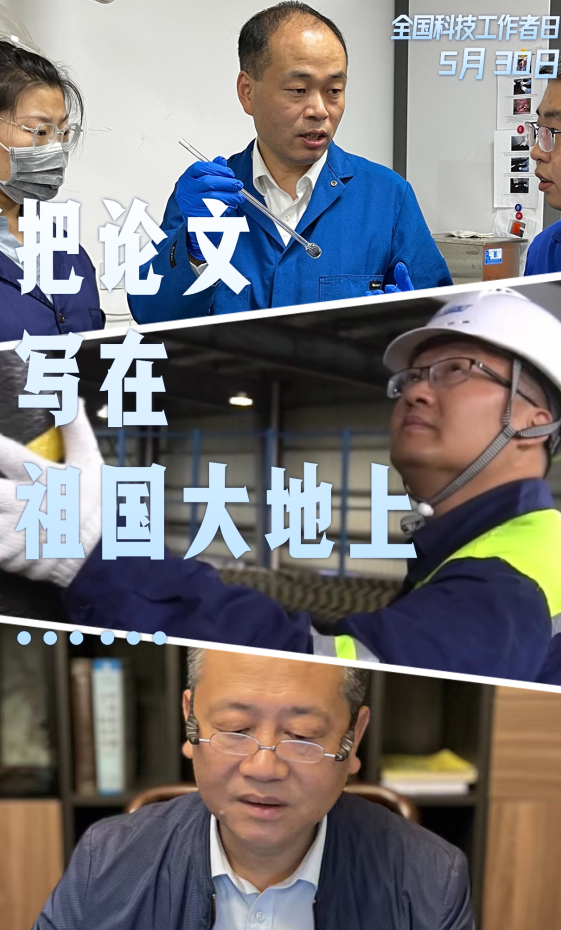
At the National Conference on Science and Technology Innovation in 2016, Xi Jinping emphasised that researchers should not merely strive for knowledge, but should apply scientific and technological achievements to solve practical problems and realise national modernisation. “Write your papers on the soil of the motherland!” This slogan, a line from the same speech in 2016, has since been frequently repeated by Xi Jinping and widely cited in official and academic discourse.
Responsible research is meant to serve technological self-reliance and China’s rise to becoming a global scientific power. Academic freedom takes a back seat to this. That puts pressure on the researchers themselves — especially those who ask questions out of curiosity, not out of state reasons. And it has consequences for international cooperation. Where science serves the nation, one never cooperates with just a scholar or a laboratory, but likely with the state as well.


